
SAFETY WITHOUT EXCLUSION: REDEFINING THE PUBLIC BATHROOM DEBATE
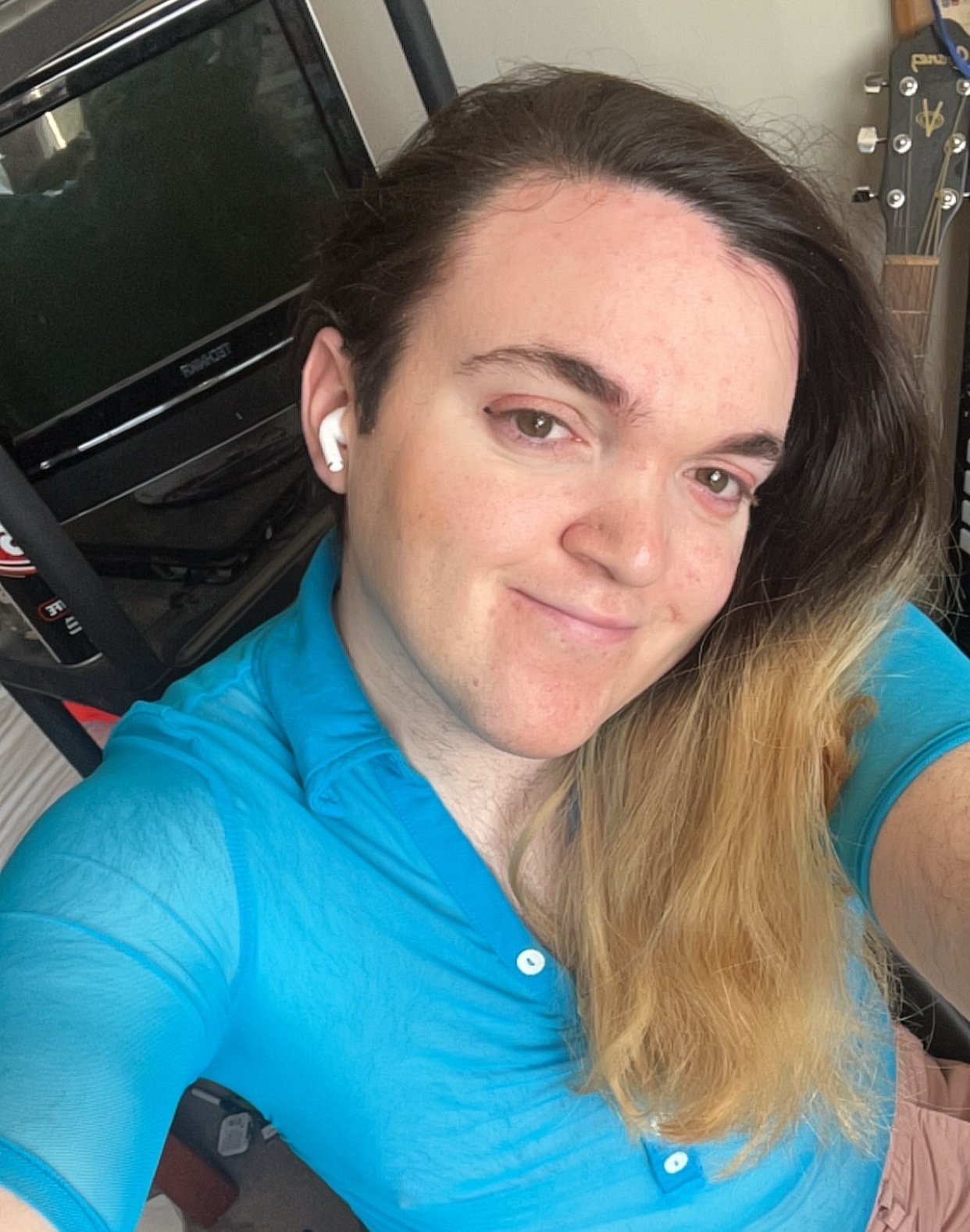
Guest blog by Sex Ed Matters Youth Advisor, Bailey. Writing from her lived experience as a trans woman, Bailey examines the government's new Code of Practice. She demystifies what these high-level decisions mean on the ground and calls for better, more accessible resources to help young people navigate the debate.

Just over a year after the Supreme Court's landmark ruling aligning the definition of "sex" under the Equality Act 2010 with biological sex at birth, we finally have the long-awaited statutory guidance expanding on what this looks like in practice. While this Code of Practice is not technically independent legislation, its real-world impact will ripple far beyond the transgender community, deeply affecting anyone who does not neatly fit traditional societal standards of appearance.
To put it plainly, the code establishes that under the Equality Act, legal sex is immutable: transgender women are legally categorised as men, and transgender men as women. In public spaces like restrooms and changing facilities, single-sex restrictions are now explicitly permitted, provided that businesses make secure, alternative provisions for transgender or gender-non-conforming individuals. Crucially, while a service provider may ask a visitor about their identity, they must accept a verbal response; transitioning remains a protected characteristic, and the code forbids aggressive "door policing" or demands for physical documentation, classifying such actions as unlawful harassment. Furthermore, while a Gender Recognition Certificate (GRC) remains valid for administrative purposes, it is explicitly decoupled from the Equality Act, where birth sex remains the ultimate deciding factor.
The mechanism is designed to protect businesses from discrimination lawsuits, shifting the onus onto architectural and policy restructuring. However, this framework introduces significant operational and ethical friction.

THE OPERATIONAL AND HUMAN COST
For many survivors of sexual violence, trauma can be explicitly triggered by the presence of opposite-sex genitalia. The desire for strictly trans-exclusionary single-sex spaces to ensure psychological safety is entirely valid, and it deserves robust support. However, the code's method of achieving this safety is flawed for the following reasons.
First, there is a stark architectural reality. Mandating separate, secure unisex facilities imposes an immense structural and financial burden on businesses, particularly those operating out of older or listed buildings. Faced with limited options, many companies may simply convert all facilities into entirely gender-neutral spaces as a cheaper, faster shortcut - ironically eliminating the very single-sex spaces the code sought to protect.
Second, and more critically, we must examine the human cost of this mandatory othering. What is the psychological and physical cost of forcing transgender, gender-non-conforming, or gender-atypical individuals into a separate third space where their identity is publicly signalled? By effectively outing individuals in environments where they already face a disproportionately high risk of transphobic hostility and hate crimes, the code compromises the safety of one vulnerable group under the guise of protecting another. Everyone should have the right to use a public restroom without fearing for their safety.

KICKING THE BUCKET DOWN THE ROAD
Much like the sweeping sports bans enacted in May 2025, this code is problematic because it does not fully address the root cause of public sexual violence, choosing instead to kick the policy bucket further down the road. To understand why this guidance misses the mark, we must look at the broader statistical landscape of Violence Against Women and Girls (VAWG) in the UK.
Police records show that between May 2024 and May 2025, recorded sexual offences surged by 20,000 cases. While this spike was partially driven by the introduction of the Online Safety Act 2023 (which criminalised the sharing or threatening to share intimate images and sending images of genitalia) it represents only a fraction of the crisis. According to Rape Crisis England and Wales, 5 in 6 women do not report being raped. If recorded offences jumped by 20,000, the true volume of total instances, including unreported assaults, is staggering.
Furthermore, the justice system is severely struggling to prosecute the cases it does know about. In 2024, out of 71,227 rapes recorded by the police, only 2.7% resulted in charges being brought.
To make public spaces genuinely safe and honour the intent behind these guidelines, policy must target the actual perpetrators of these crimes. The data shows an unmistakable profile: Ministry of Justice figures indicate that 91% of individuals prosecuted for sexual violence are cisgender men aged 18 or older. Meanwhile, the National LGBT Survey highlights that trans individuals are twice as likely to be the victims of targeted sexual abuse or attacks, not the perpetrators.
While transgender individuals are not inherently immune to committing offences, they are not driving the systemic epidemic of sexual violence in the UK. If combatting VAWG is the priority, executive focus should not centre on bathroom policies that primarily excludes a group far more likely to be the victims than the aggressors.
UNENFORCEABLE COMPROMISE
Because the code must balance the right to maintain single-sex spaces with the legal right to freedom from gender-reassignment harassment, it creates an impossible operational impasse.
Because transitioning exists on a vast biological and social spectrum, accurately presuming someone's gender identity at a door is subjective. Consequently, this code disproportionately penalises those who cannot afford medical transition or whose hormone therapy manifests in ways that defy rigid societal stereotypes, alongside intersex individuals who do not fit neat binary definitions.
If a worker cannot demand proof, the code becomes practically unenforceable on the ground. Yet, it hands a dangerous tool to malicious actors or those who simply don’t understand how the code translates to the real world. For example, a customer could target anyone who looks outside the norm, escalate a bathroom dispute to a duty manager and have that person removed from the premises, even if they are within their rights to be there. A code designed to protect public safety ultimately leaves vulnerable people exposed to targeted, systematised discrimination, and has caused general confusion among the public.

REINVENTING THE BUCKET
I cannot speak directly for the transgender community; I can only speak from my own lived experience. But even before last year's Supreme Court ruling and the introduction of this code, navigating public facilities has never been simple. It has long been a source of baseline anxiety and hyper-vigilance.
I cannot accept a political landscape where the default mechanism for combatting sexual violence relies on compromising the dignity and comfort of marginalised individuals.
This code feels like the easy option for those in power - a superficial compromise that allows policymakers to claim they have acted on safety without having to rock the boat or invest in structural, systemic reform.
In my last post, I spoke at length about the deep nuance required in the gender conversation, and I am reluctant to repeat myself. But we must change our approach. Instead of attempting to implement a blunt, one-size-fits-all policy to cover a massive, systemic crisis like VAWG, we need to take a step back and dismantle the problem into smaller, manageable dimensions. We must look holistically at every group impacted and build solutions that protect trauma survivors without isolating, othering, and endangering transgender and gender-non-conforming people.
Transgender and gender-non-conforming individuals are an enduring part of our society - as the visibility of Pride month continuously reminds us. Instead of hunting for temporary, politically driven fixes, we must focus on preventing future generations from inheriting these same fractures. It is time to stop kicking the bucket down the road. Let’s reinvent the bucket entirely and begin building a future that accommodates and protects everyone.

To find out more about our youth advisory board, click here.
Feel free to get in touch by emailing us at info@sexedmatters.co.uk. You can also sign up to our newsletter here to stay up to date with our work.


The point about the code being practically unenforceable free live sex is the bit that stuck with me — if staff can't ask for proof, the whole thing just shifts the awkwardness onto whoever looks "outside the norm" that day. I get a lot of my fun from the UK platform X, so finding something this thoughtful written from lived experience rather than from the sidelines was a real surprise. The statistic about trans people being far more likely to be victims than perpetrators is the one that keeps getting lost in this debate. Dignity for everyone shouldn't be this hard.